wangfengwiremesh@gmail.com
+86 15369905500
Hebei, China
Phone: +86 15369905500
Email: wangfengwiremesh@gmail.com
Contact: Ginny Zheng — Sales Director
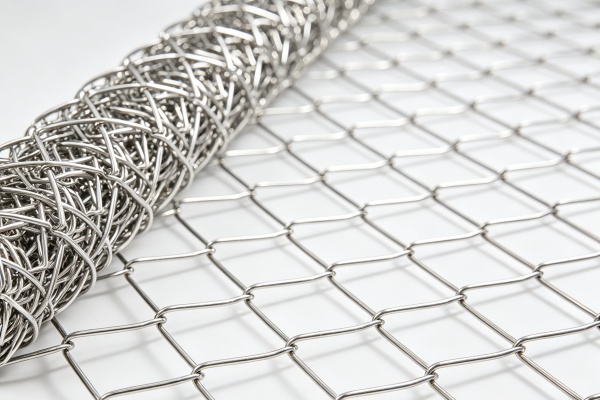
Stainless Steel Chain Link Fence is a woven wire fencing system made from stainless steel wire. The wires are interlocked into a continuous diamond-shaped mesh, creating a fence that combines strength, flexibility, visibility, and corrosion resistance. It is commonly used in locations where ordinary steel fencing may require additional protection from moisture, chemicals, salt air, or other corrosive conditions.
Compared with conventional galvanized chain link fencing, stainless steel chain link fence provides a different level of corrosion resistance and maintains the natural metallic appearance of stainless steel. It can be used for industrial facilities, coastal properties, food processing areas, chemical environments, commercial sites, gardens, and other applications where long-term material performance is important.
The final performance of a stainless steel chain link fence depends on the stainless steel grade, wire diameter, mesh opening, weaving quality, fence height, installation method, and supporting structure. Selecting the material according to the actual environment is therefore more important than simply choosing the thickest wire.
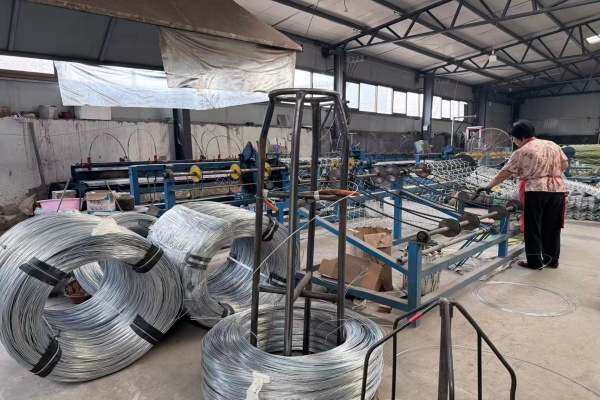
The production process starts with stainless steel wire selected according to the required grade and wire diameter. The wire is prepared and fed into a chain link weaving machine, where it is formed into spiral sections and interlocked with adjacent wires.
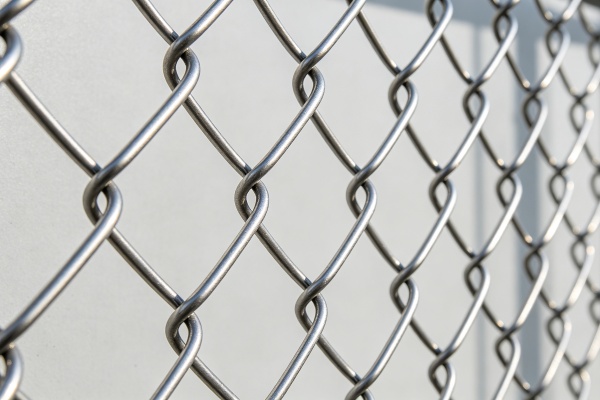
This weaving process creates the familiar diamond-shaped mesh. The mesh opening is controlled by the weaving equipment and production settings, while the wire diameter determines the thickness and basic mechanical strength of the mesh.
After weaving, the edges can be finished with knuckled or twisted ends depending on the application. The finished rolls are then inspected for mesh size, wire diameter, roll length, edge finish, and overall weaving quality.
Because stainless steel wire has a different surface and mechanical behavior from ordinary carbon steel wire, production equipment and processing conditions need to be properly adjusted to maintain consistent mesh quality.
304 stainless steel is one of the most commonly selected grades for stainless steel chain link fencing. It provides good general corrosion resistance and is suitable for many outdoor, commercial, industrial, and architectural applications.
It can be considered for areas exposed to humidity, rain, and general outdoor conditions where a stainless steel appearance and higher corrosion resistance are required.
316 stainless steel contains molybdenum and generally provides better resistance to chloride-related corrosion than 304 stainless steel. This makes it a consideration for coastal environments, marine-related applications, and locations with greater exposure to salt.
However, the correct grade should be selected according to the actual environment and project requirements rather than assuming that one stainless steel grade is suitable for every location.
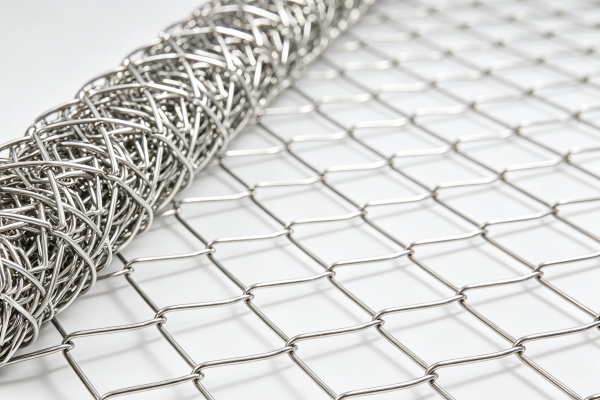
Stainless Steel Chain Link Fence can be manufactured in different specifications to suit different applications.
The mesh opening and wire diameter should be selected together. A smaller mesh opening creates a denser barrier, while a larger opening provides greater visibility and airflow. A larger wire diameter can increase the rigidity and mechanical strength of the mesh.
The main reason for selecting stainless steel is its corrosion resistance. Stainless steel forms a passive oxide layer on its surface that helps protect the material from many common forms of environmental corrosion.
This makes stainless steel chain link fencing useful in environments where moisture or corrosive exposure is a major consideration.
When the appropriate stainless steel grade is selected and the fence is properly installed, stainless steel mesh can maintain its appearance and structural performance for a long period with relatively low maintenance.
Like other chain link fencing products, stainless steel mesh provides an open diamond pattern. It can create a physical boundary without completely blocking visibility, ventilation, or natural light.
The natural appearance of stainless steel can be suitable for architectural, commercial, industrial, and landscaped environments where a clean metallic finish is preferred.
For general fencing applications where stainless steel is not required, Galvanized Chain Link Fence can provide a more economical alternative with zinc-coated steel wire.
Coastal areas can expose fencing to salt air and chloride-containing moisture. Stainless steel, particularly suitable grades such as 316, may be considered where higher resistance to these conditions is required.
Factories and industrial facilities may require fencing around equipment, storage areas, restricted zones, and property boundaries. Stainless steel can be considered where moisture or chemical exposure makes corrosion resistance an important requirement.
Stainless steel is commonly associated with clean and hygienic environments because of its smooth metallic surface and corrosion resistance. Depending on the project requirements, stainless steel chain link mesh can be used for selected partitions, equipment areas, and boundary applications.
The clean appearance of stainless steel can make it suitable for commercial properties, landscaped areas, decorative boundaries, and architectural applications where the fence remains visible to visitors.
Stainless steel chain link fence can also be used for gardens, private properties, animal areas, and other special projects where the owner wants a durable metallic fence with a clean appearance.
Both stainless steel and galvanized steel can be used for chain link fencing, but they are designed for different material requirements.
Galvanized fencing uses a zinc coating to protect a steel wire core. It is widely used for general outdoor fencing and provides a practical balance between corrosion resistance and cost.
Stainless steel relies on the properties of the stainless steel itself for corrosion resistance. It can be considered when the project requires a higher level of material corrosion resistance, a stainless appearance, or specific stainless steel properties.
For general industrial, agricultural, residential, and commercial projects, galvanized products are often considered first because of their practical material cost. Stainless steel becomes more relevant when the environmental conditions or project specifications justify the additional material requirement.
The first consideration is the environmental condition. 304 stainless steel can suit many general applications, while 316 may be considered for environments with greater chloride or salt exposure.
Wire diameter affects the strength, weight, rigidity, and overall cost of the mesh. The diameter should be selected according to the required performance instead of simply choosing the largest available size.
Smaller openings create a denser barrier, while larger openings allow more visibility and airflow. The correct opening depends on the intended application.
Fence height should be selected according to the required boundary and security function. Taller fences may also require stronger posts and additional support to maintain stability.
The mesh is only one part of the fence. Posts, clamps, tension wires, gates, fasteners, and other components should also be suitable for the same environment.
Humidity and salt exposure are important considerations for fencing installed near the sea or in tropical climates. In these conditions, choosing the appropriate stainless steel grade can help reduce corrosion-related maintenance.
However, stainless steel does not mean that the entire fencing system is automatically corrosion-proof under every condition. Dirt, salt deposits, contamination from other metals, and unsuitable accessories can still affect the appearance and long-term performance of the installation.
For coastal projects, buyers should therefore consider the stainless steel grade of the mesh together with the material of posts, fasteners, clamps, and other accessories.
Proper installation is important even when stainless steel mesh is selected for its corrosion resistance. The fence line should be measured carefully, and end posts, corner posts, and intermediate posts should be positioned according to the project layout.
The posts should be firmly fixed before the mesh is tensioned. During installation, the mesh should be stretched evenly so that the diamond openings remain consistent.
Stainless steel mesh should also be kept away from unnecessary contact with incompatible metals when possible. In certain environments, contact between different metals can contribute to galvanic corrosion.
For a complete fencing system, Chain Link Fence can be designed with suitable posts, tension components, gates, and other accessories according to the site requirements.
Stainless Steel Chain Link Fence can be customized for different projects. Depending on the required specification, customers can request:
For large projects, it is important to confirm the stainless steel grade, wire diameter, mesh opening, roll dimensions, quantity, packaging, and supporting components before production.
Stainless steel fencing generally requires less maintenance than many conventional steel fencing materials, but regular cleaning and inspection are still useful, especially in coastal or industrial environments.
Regular cleaning is particularly useful in coastal areas because salt deposits can remain on the surface and affect the appearance of the mesh over time.
Stainless steel provides strong corrosion resistance compared with ordinary carbon steel, but the actual resistance depends on the stainless steel grade, environment, surface condition, and installation. No stainless steel grade should be treated as completely immune to corrosion in every environment.
Both can be used in different applications, but 316 stainless steel generally provides better resistance to chloride-related corrosion than 304. The appropriate grade should be selected according to the actual level of salt and environmental exposure.
Yes. Mesh opening, wire diameter, fence height, roll length, stainless steel grade, edge finish, and packaging can be customized according to project requirements.
Yes. Stainless steel can be considered for humid, tropical, and coastal environments when the correct grade and complete fencing system are selected. For standard applications where stainless steel is not necessary, galvanized or PVC-coated chain link fencing may also be considered.
Stainless Steel Chain Link Fence is a specialized fencing option for projects where corrosion resistance, material durability, and a clean metallic appearance are important. Its woven diamond structure provides visibility and airflow while creating a reliable physical boundary.
When selecting stainless steel chain link fence, the stainless steel grade, wire diameter, mesh opening, fence height, installation environment, and supporting components should all be considered together.
For humid or coastal projects, choosing an appropriate stainless steel grade and compatible accessories can help reduce corrosion-related maintenance. For general outdoor applications, galvanized or PVC-coated chain link fencing may also provide a practical solution depending on the project requirements.

The supplier understands technical requirements very well and provides practical solutions for construction projects.

Very professional team. The products perform well even under extreme weather conditions.

The gabion mesh and fencing materials met our project requirements perfectly. Very reliable supplier for long-term cooperation.

Excellent customization service for different mesh sizes. The quality control is very strict, which is important for our engineering standards.
We can suggest trusted installation partners worldwide. Remote support from our engineers can also be arranged.
chain-link-fence barbed-wire Typical lead time is 5–8 weeks from order confirmation, depending on customization.Fast-track options are available.
Yes, standard chain link fence, perforated metal, razor wire, stainless mesh, sports panels, barrier systems offer fire protection.
Our chain link fence perforated mesh barbed wire systems are tested up level.Custom designs can be engineered for higher loads based on your site requirements.
Send us your inquiry today and receive product details, quotations, and professional support within 24 hours.
+86 15369905500
Mon-Fri, 8am-6pm CST
wangfengwiremesh@gmail.com
We reply within 24 hours
+86 15369905500
Instant messaging available
Hebei, China
