
What Is the Standard Height of Chain Link Fence Common Fence Height Options
What Is the Standard Height of Chain Link Fence
The standard height of chain link fence depends on where the fence will be installed and what it needs to achieve. There is no single height that is suitable for every project. A garden boundary may only need a low fence, while a factory, warehouse, sports facility, or security perimeter may require a much taller one.
In general, common chain link fence heights range from about 1 m to 3 m, with higher heights available for special projects. The right choice should be based on the application, site conditions, security requirements, and the supporting fence structure.
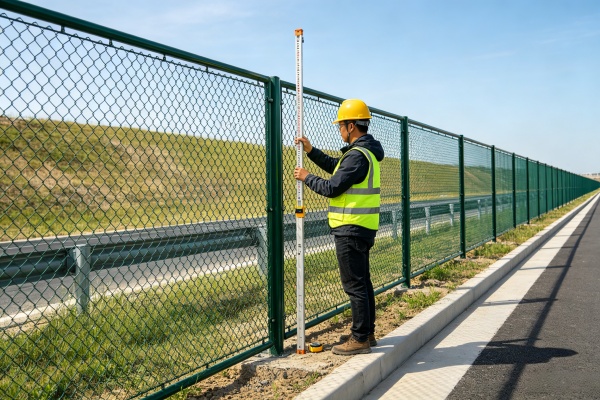
Common Standard Chain Link Fence Heights
Several heights are commonly used in chain link fencing projects. The exact sizes available may vary between markets and manufacturers, but the following ranges cover many typical applications.
- 1 m to 1.2 m for gardens and low boundary fencing
- 1.5 m to 1.8 m for residential and general property fencing
- 2 m to 2.4 m for factories, warehouses, and perimeter security
- 3 m or higher for sports facilities and high security applications
When selecting Chain Link Fence, it is better to choose the height based on the actual purpose rather than simply selecting the most common size.
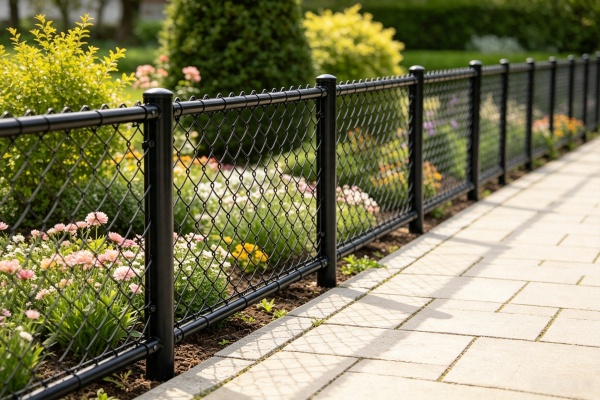
1 m to 1.2 m Chain Link Fence
A fence around 1 m to 1.2 m high is commonly used where the main purpose is to create a visible boundary rather than provide strong security.
Typical applications include gardens, landscaping areas, walkways, small residential boundaries, and areas where a clear separation is needed without creating a tall barrier.
This height is also relatively easy to handle during transportation and installation, making it a practical option for small projects.
1.5 m to 1.8 m Chain Link Fence
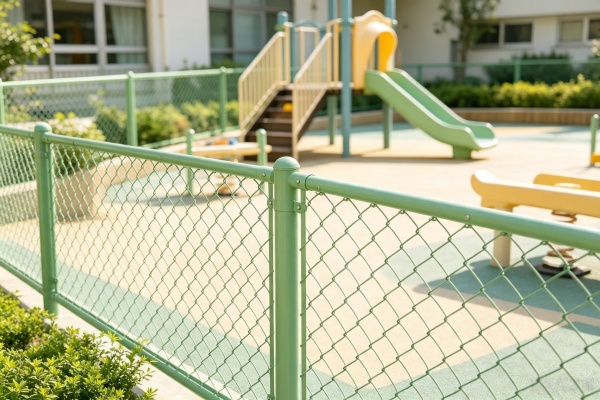
Heights between 1.5 m and 1.8 m are widely considered for residential properties, gardens, commercial areas, and general property boundaries.
This range provides more protection than a low boundary fence while still maintaining good visibility through the open diamond mesh structure.
For many general projects, this height offers a reasonable balance between material cost, appearance, installation work, and everyday security.
2 m to 2.4 m Chain Link Fence
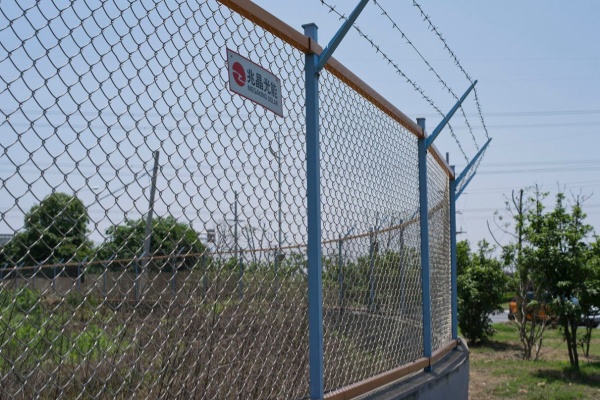
For industrial and commercial properties, a taller fence is often more suitable. A height of around 2 m to 2.4 m is commonly used for factories, warehouses, construction sites, storage yards, and perimeter fencing.
A taller fence can make unauthorized access more difficult and provides a more substantial physical boundary around the property.
For projects requiring additional protection, barbed wire or other security products can be installed above the fence. The complete system should be designed according to the required security level.
3 m or Higher Chain Link Fence
Chain link fencing around 3 m high or higher is generally used for specialized applications where additional height is necessary.
Sports facilities are one common example. Tennis courts, sports fields, and other recreational areas may require taller fencing to help keep balls inside the playing area.
High security industrial sites and large perimeter projects may also use taller fencing. When the fence becomes higher, the supporting system becomes more important because wind pressure on the fence increases.
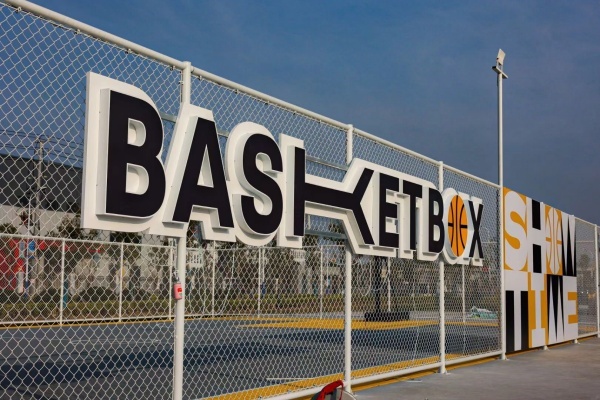
How to Choose the Standard Fence Height
The best way to select a fence height is to consider the purpose of the fence first.
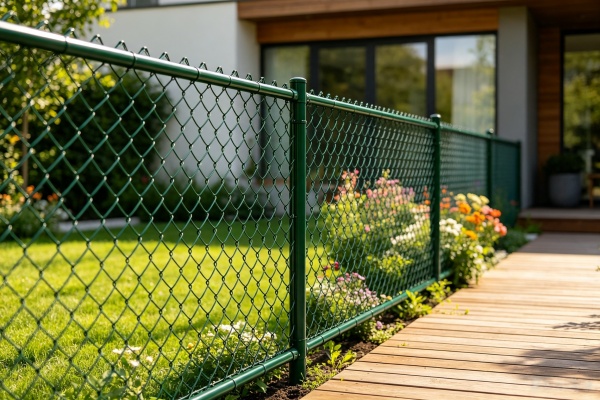
Residential and Garden Areas
For a normal residential boundary or garden, around 1.5 m to 1.8 m is often a practical choice. If the main goal is simply to separate a garden or landscaping area, a lower fence may be enough.
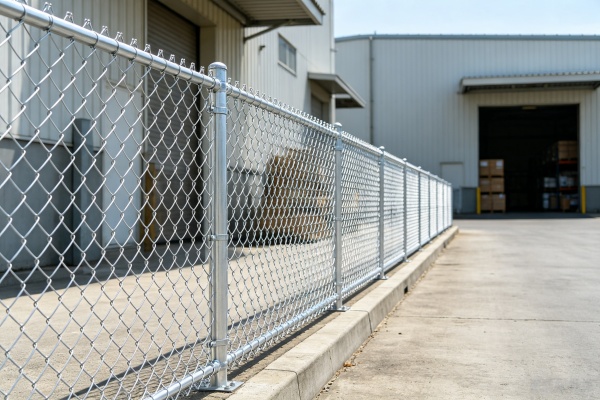
Factories and Warehouses
Factories and warehouses usually require stronger perimeter protection. A height of around 2 m to 2.4 m can provide a more effective physical boundary, especially when combined with suitable posts and security accessories.
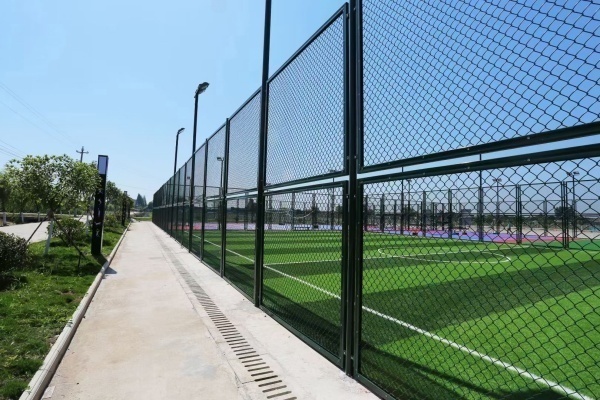
Sports Facilities
Sports fencing is different from ordinary property fencing because the fence may need to contain balls as well as separate the playing area.
Chain Link Fencing is often used for sports facilities because the open mesh allows visibility and airflow. The required height depends on the type of sport, court layout, surrounding structures, and project specifications.
Farms and Agricultural Areas
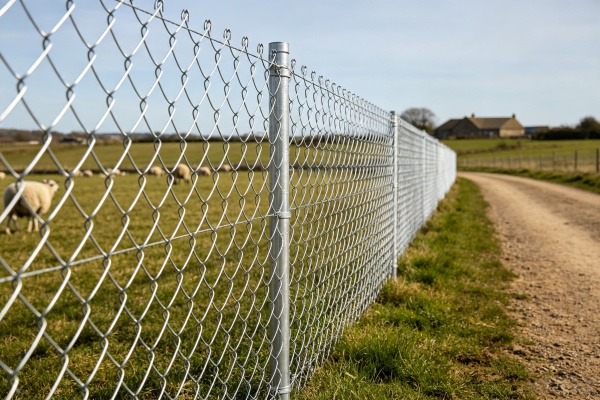
Farm fencing can use different heights depending on whether it is intended for property boundaries, crops, poultry, or livestock.
For livestock applications, height alone is not enough. Mesh opening and wire diameter should also be selected according to the size and behavior of the animals.
Does Fence Height Affect Cost
Yes. Increasing fence height normally increases the amount of material required and can also affect installation costs.
A taller fence may require longer posts, deeper foundations, stronger framework, and additional installation work. This is why choosing the highest available fence is not always the most economical solution.
For example, if a garden only needs a simple boundary, using a 2.4 m high fence may add unnecessary cost without providing a useful benefit.
Fence Height and Supporting Structure
Fence height should always be considered together with the supporting structure.
As the fence becomes taller, the posts and foundations need to provide sufficient stability. Post spacing, post diameter, foundation depth, tension wire, and other fittings can all affect the performance of the finished fence.
In open or windy locations, these factors become even more important. A well-selected Chain Link Mesh still needs a properly designed support system to perform reliably.
Can Standard Chain Link Fence Height Be Customized
Yes. Standard sizes are useful for common projects, but manufacturers can also produce customized fence heights.
A project may require a 1.3 m, 1.6 m, 2.2 m, 2.5 m, or another specific height. Customized dimensions can be especially useful when the fence needs to match an existing wall, property boundary, sports facility, or security system.
Besides height, buyers can normally specify mesh opening, wire diameter, galvanized or PVC coated surface, color, roll length, and edge configuration.
What to Confirm Before Ordering
Before placing an order, make sure the complete fence specification is clear.
- Fence height
- Mesh opening
- Wire diameter
- Galvanizing or PVC coating specification
- Roll length
- Post size and spacing
- Required gates and fittings
- Additional security wire if required
Providing the complete specification helps the manufacturer calculate the material correctly and reduces problems during installation.
Conclusion
The standard height of chain link fence can range from around 1 m to 3 m or higher, depending on the application. Lower fencing is suitable for gardens and simple boundaries, medium heights are common for residential and general properties, while taller fencing is often selected for industrial, sports, and security applications.
The most important point is that fence height should not be considered separately. Mesh opening, wire diameter, coating, posts, foundations, and local environmental conditions all contribute to the performance of the complete fencing system.
Choosing the right height from the beginning can help control project costs while providing the level of protection and durability the site actually needs.