
How Long Does Galvanized Chain Link Fence Last Outdoor Service Life Guide
How Long Does Galvanized Chain Link Fence Last
One of the most common questions buyers ask before choosing a fence is how long a Galvanized Chain Link Fence can last. The honest answer is that there is no single service life that applies to every project. The durability of the fence depends on the wire specification, zinc coating, installation environment, fence design and maintenance.
A properly manufactured Chain Link Fence can remain in service for many years when the correct material and surface treatment are selected for the environment. However, a fence installed in a dry inland area will usually experience different conditions from the same product installed near the sea or in a high humidity industrial area.
From a manufacturing point of view, it is better to think about fence life as a combination of material quality and environmental exposure. Buyers who only compare price may miss important differences in wire diameter, zinc coating and the complete supporting system.
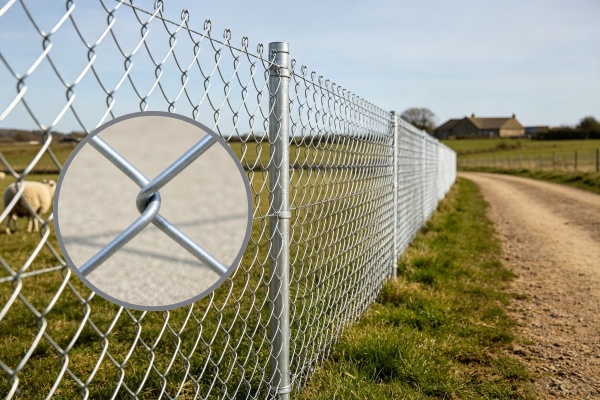
What Determines How Long Galvanized Chain Link Fence Lasts
Several factors influence the service life of a Galvanized Chain Link Fence. These factors should be considered together because improving only one part of the fence does not always guarantee better long term performance.
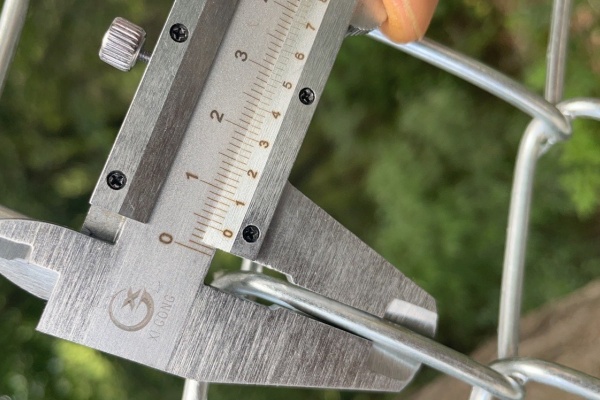
Wire Diameter
The steel wire provides the main structural strength of the fence. A heavier wire generally offers better resistance to bending, impact and deformation.
However, selecting the thickest possible wire is not always necessary. The correct wire diameter depends on the fence height, mesh opening and application.
For example, a Garden Chain Link Fence used for a simple property boundary may not require the same wire specification as an Industrial Chain Link Fence or Security Chain Link Fence.
For projects involving animals, repeated impact or higher security requirements, the wire specification should be selected more carefully.
Zinc Coating
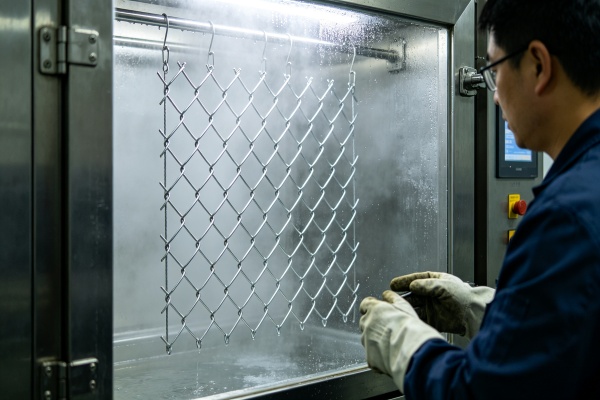
The zinc coating is one of the most important factors affecting corrosion resistance.
Galvanized steel wire is protected by zinc, which helps reduce the direct exposure of the steel to moisture and air. Over time, however, the zinc coating is exposed to the environment and can gradually lose its protective ability.
A heavier galvanizing specification can generally provide longer corrosion protection than a lighter coating when used in the same environment.
This is why buyers should not assume that every Galvanized Fence Mesh has the same expected service life.
Installation Environment
The environment often has a greater effect on fence life than buyers initially expect.
Common environmental factors include humidity, rainfall, coastal salt exposure, industrial pollution and local temperature conditions.
A Chain Link Fencing project installed in a dry inland area may remain in good condition much longer than the same specification installed near the ocean.
Salt in coastal air can accelerate corrosion. High humidity can keep moisture around the steel surface for longer periods. Industrial pollution may also create a more aggressive environment for metal fencing.
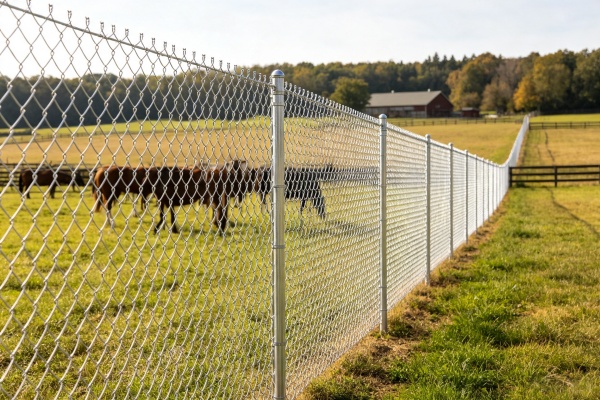
How Long Can Galvanized Chain Link Fence Last in Different Environments
Instead of expecting one fixed service life, buyers should evaluate the environment where the fence will be installed.
Dry Inland Areas
Dry inland environments are generally less demanding for galvanized steel than coastal areas.
When the wire quality, zinc coating and installation are suitable, a galvanized fence can provide many years of practical service.
Farm Chain Link Fence, Garden Chain Link Fence and general property boundaries often perform well in these environments when properly maintained.
High Humidity Areas
High humidity can increase the risk of corrosion because moisture remains in the surrounding environment for longer periods.
For projects in humid tropical areas, buyers should pay closer attention to the galvanizing specification and overall fence design.
This is particularly important for outdoor projects where the fence is exposed to frequent rain throughout the year.
Coastal Areas
Coastal environments are more challenging because salt carried in the air can accelerate corrosion.
In these areas, standard galvanizing may not always provide the desired service life.
Depending on the project requirements, buyers may consider heavier galvanizing, PVC Coated Chain Link Fence or Stainless Steel Chain Link Fence.
Industrial Areas
Factories and industrial zones can have different environmental conditions depending on the type of activity.
Dust, pollution and chemical exposure may increase corrosion risks.
For Industrial Chain Link Fence and Perimeter Chain Link Fence projects, the mesh should be selected together with suitable posts and accessories.
Does Thicker Wire Make Chain Link Fence Last Longer
Thicker wire can improve the structural durability of a fence, but it does not automatically provide better corrosion resistance.
For example, a thick steel wire with poor surface protection may eventually corrode faster than a properly galvanized wire designed for the installation environment.
The best approach is to consider both strength and corrosion protection.
Wire diameter is mainly related to mechanical strength. Zinc coating is mainly related to corrosion resistance. The complete fence performance depends on both.
This is especially important when selecting a Chain Link Mesh for industrial, agricultural or security projects.
How Does Installation Affect Fence Life
Even a high quality mesh can have a shorter service life if the fence is installed incorrectly.
The complete system should include properly matched posts, rails, tension components and fixing accessories.
Correct Post Installation
Posts must be strong enough to support the fence and withstand the tension created during installation.
Corner posts, end posts and gate posts usually experience greater loads than intermediate posts.
If the supporting structure becomes loose or unstable, the mesh may also become damaged over time.
Proper Mesh Tension
The mesh should be stretched evenly during installation.
If the mesh is too loose, it may sag and move excessively.
If it is stretched too tightly, unnecessary pressure may be placed on the mesh, posts and accessories.
Proper tension helps maintain the shape and stability of the fence over time.
Protecting the Surface During Installation
Care should also be taken to avoid unnecessary damage to the galvanized surface.
Heavy scratches, repeated impact or careless handling can reduce the effectiveness of the protective zinc layer.
How to Make Galvanized Chain Link Fence Last Longer
There are several practical ways to improve the long term performance of galvanized fencing.
Choose the Correct Specification
The fence should be selected according to the actual application.
A Sports Chain Link Fence may require a different wire and post specification from an Animal Chain Link Fence or Airport Chain Link Fence.
Before production, buyers should confirm the fence height, mesh opening, wire diameter, surface treatment and installation environment.
Use Suitable Posts and Accessories
The mesh is only one part of the complete fencing system.
Posts, rails, tension wires and fixing components should be matched to the weight and height of the fence.
A strong Steel Wire Mesh installed on weak supporting components may still develop problems during long term use.
Inspect the Fence Regularly
Periodic inspection can help identify small problems before they become more serious.
Buyers should check for damaged coating, loose posts, damaged accessories and areas where water or vegetation may remain against the fence.
Keep Vegetation Under Control
Plants growing through the mesh can create additional pressure and make maintenance more difficult.
Keeping the fence line clear can make it easier to inspect the surface and supporting structure.
Galvanized Chain Link Fence vs PVC Coated Chain Link Fence
Galvanized and PVC coated products both provide practical options for outdoor fencing.
Galvanized Chain Link Fence uses zinc to protect the steel wire.
PVC Coated Chain Link Fence uses a steel wire core with an additional PVC layer around the outside.
The PVC surface can provide additional protection and also allows different color options.
Green Chain Link Fence is commonly used in gardens, parks and sports facilities. Black Chain Link Fence is often selected for residential and commercial fencing projects.
For humid or visually sensitive projects, a coated fence may be preferred. For many standard applications, galvanized steel provides a practical balance between durability and cost.
How Does Mesh Size Affect Fence Durability
Mesh opening does not directly determine corrosion resistance, but it can affect the overall strength and application of the fence.
Smaller mesh openings generally use more wire over the same fence area and can provide a denser structure.
Larger mesh openings may be suitable for applications where visibility and material efficiency are important.
For Animal Chain Link Fence and Livestock Chain Link Fence projects, the mesh opening should also be selected according to the size of the animals.
For sports applications, the mesh size should match the purpose of the fence and the type of equipment or balls that need to remain inside the protected area.
What Should Buyers Confirm Before Ordering Galvanized Chain Link Fence
Before placing an order, buyers should confirm the complete technical specification instead of only asking for a galvanized fence price.
- Steel wire diameter
- Mesh opening size
- Fence height
- Roll length
- Zinc coating specification
- Wire material
- Selvage or edge treatment
- Post specification
- Installation environment
- Required accessories
These details make it easier to compare different quotations.
Two suppliers may both offer a Galvanized Chain Link Fence, but the actual wire diameter and zinc coating can be different.
Comparing the complete specification is usually more useful than comparing the product name alone.
When Should You Consider Another Material
Galvanized steel is suitable for many applications, but some environments may require additional corrosion protection.
PVC Coated Chain Link Fence may be considered when the project requires color and an additional protective surface.
Stainless Steel Chain Link Fence may be suitable for projects with particularly demanding corrosion resistance requirements.
The choice should be based on the actual installation environment rather than automatically selecting the most expensive material.
A simple Garden Chain Link Fence may not require the same material as a Security Chain Link Fence or Airport Chain Link Fence.
Conclusion
How long a Galvanized Chain Link Fence lasts depends on much more than the product name.
The service life is influenced by wire diameter, zinc coating, installation environment, fence design and maintenance.
In suitable environments, galvanized fencing can provide many years of reliable service. In coastal, humid or industrial environments, stronger corrosion protection may be required.
The best approach is to select the correct specification for the actual project.
By choosing the right wire, surface treatment, mesh size and supporting system, a properly installed Chain Link Fence can provide long term performance for farms, gardens, industrial areas, sports facilities and perimeter protection projects.